Tuesday, January 10, 2006

What’s the biggest Polish city in the World?

(Chicago! Joke told to me by a Polish guy in Krakow)

My Polish adventure began on Dec 26, when I left the US on a flight bound to Warsaw, via Amsterdam. It didn’t begin very smoothly. As the airplane was taxiing into the terminal in Warsaw, the pilot came on the intercom and said (exact words), “Welcome to Warsaw, and thank you for flying KLM airlines. We will be at the terminal soon; however I have some sad news for some of you. Because of a computer malfunction, about half of the baggage did not get loaded onto the plane in Amsterdam. We apologize for this, but if you will contact the agents in the terminal, they will be happy to assist you.”

Fortunately, I had packed some clothing in my small carry-on backpack so that I wouldn’t have to get into my large backpack during the one night I was planning to spend in Warsaw. To the credit of the KLM representatives in Warsaw, they got my bag back to me within three hours, which is a lot better than the full day it took the Louisville, Kentucky Northwest office to get the same bag to me when it failed to arrive with me on the flight home.
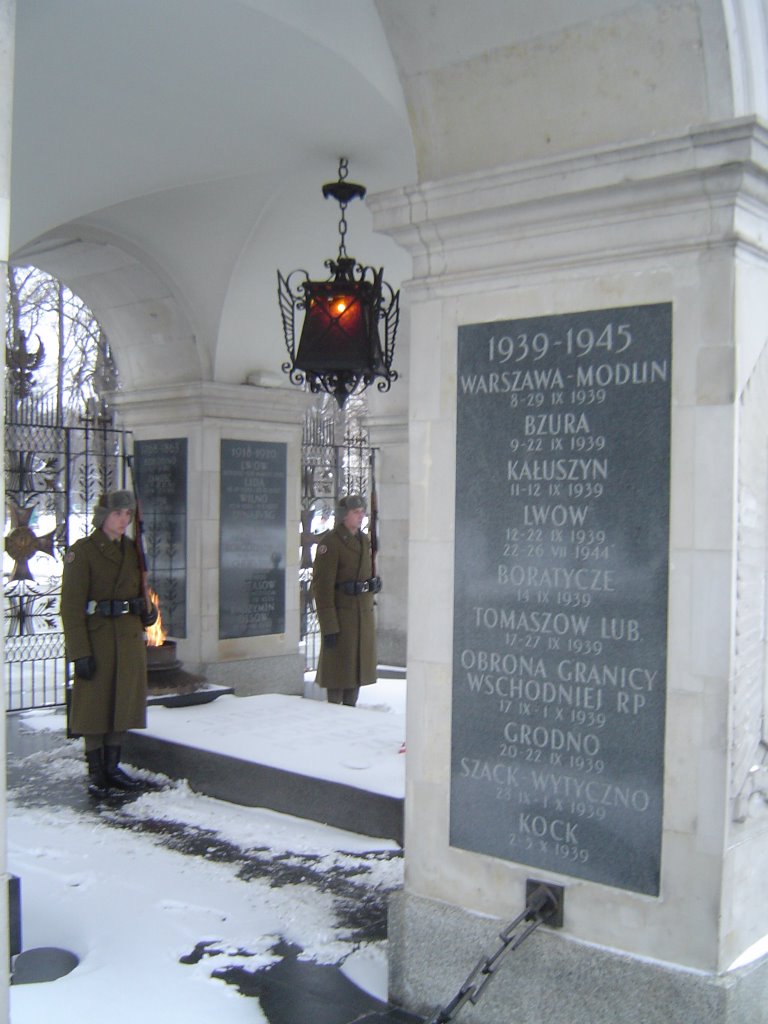
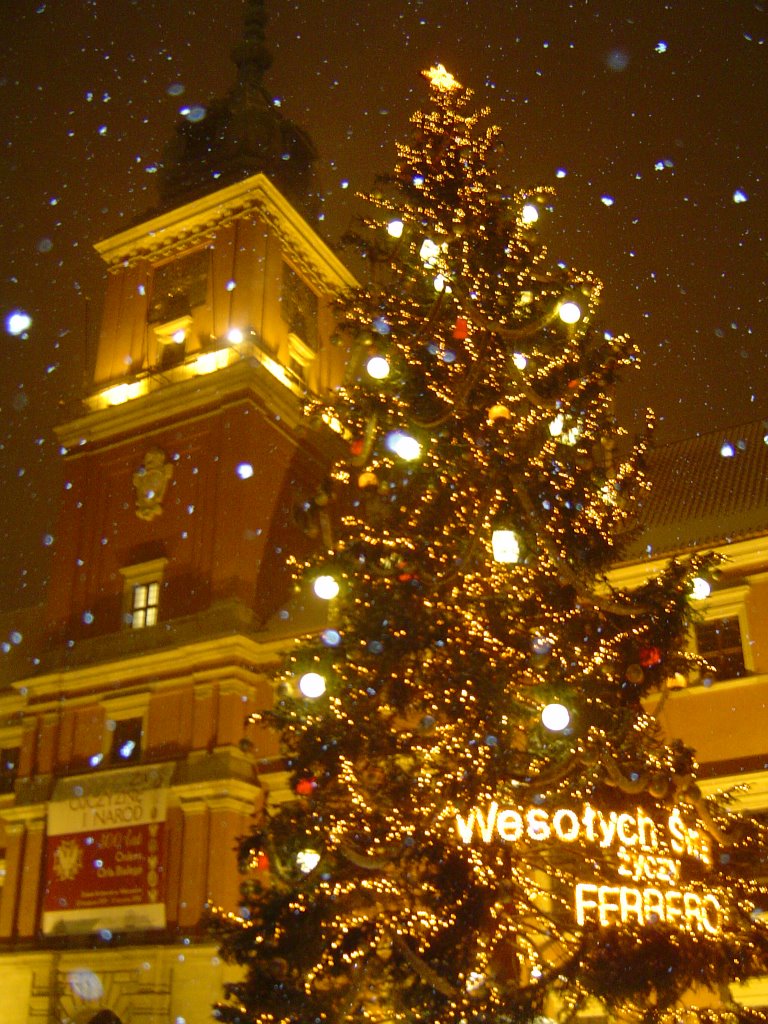
Warsaw is a great city, and I tried my best to spend my time there seeing as much as I could, but Poland in the end of December is bitter cold, and I have to say that the most I could take at a time was a couple of hours before I had to duck inside a café for some hot wine or tea. I had dinner at a jazz club the first night I was there and enjoyed some perogies, the Polish national dish. The next day I visited a museum of photography, the tomb of the unknown Polish soldier, and spent a lot of time walking around the old town area before I had to board a train to Krakow that night. (For some pictures of Warsaw, click here: http://www.okcomputer.org/gallery/album23)

On the way to Krakow, I encountered the most sincere and enthusiastic display of helpfulness I’ve ever experienced in all the traveling I’ve done. To set the scene, I was in a typical Eastern European train compartment in which there were six seats. At some point, I asked one of the people traveling with me if they could speak English, and fortunately, she could. I then asked that if I called a hostel on my phone, would it be possible for her to talk to the staff there and ask them if there were any rooms available for the next three nights. This soon turned into a full on telethon conducted by her and the other two people in the compartment to find me a suitable room! Despite their efforts, which lasted for about 45 minutes, there didn’t seem to be any rooms available at any reasonably priced places.

Well, as luck (or fate) would have it, I was greeted as soon as I got off the train by an older Polish guy who introduced himself as Ted and proceeded to tell me at great length about the spacious apartment he had for rent. A little questioning revealed that the apartment was actually more like a room in the apartment that he and his wife owned and lived in. It wasn’t what I’d consider an ideal situation, but I agreed to take a look and see if I liked it.

It turned out to be a bit run down, however at 50 zlaties per night (about $16) the price wasn’t bad, and if I turned it down, I had no idea how long it might take to find another place. Besides this, they seemed friendly, and I knew that at their age they were probably both on government pensions and could use the money – so I decided to take it. More about the apartment situation later...

Krakow turned out to be a great city! With the snow covering everything, it had a very “Christmas wonderland” kind of look and feel. The city center is a walled town, with cobblestone roads that lead inward from all directions towards the center square, each one passing through a massive gate as it comes into the city. A massive castle called Wawel overlooks the old town and the river that snakes behind it. There are cozy little restaurants of all varieties and excellent jazz and music clubs throughout the city. One of the highlights of my visit was a classical music concert in a beautiful (but very cold) church! (To see my pictures from Krakow, click here: http://www.okcomputer.org/gallery/album160)
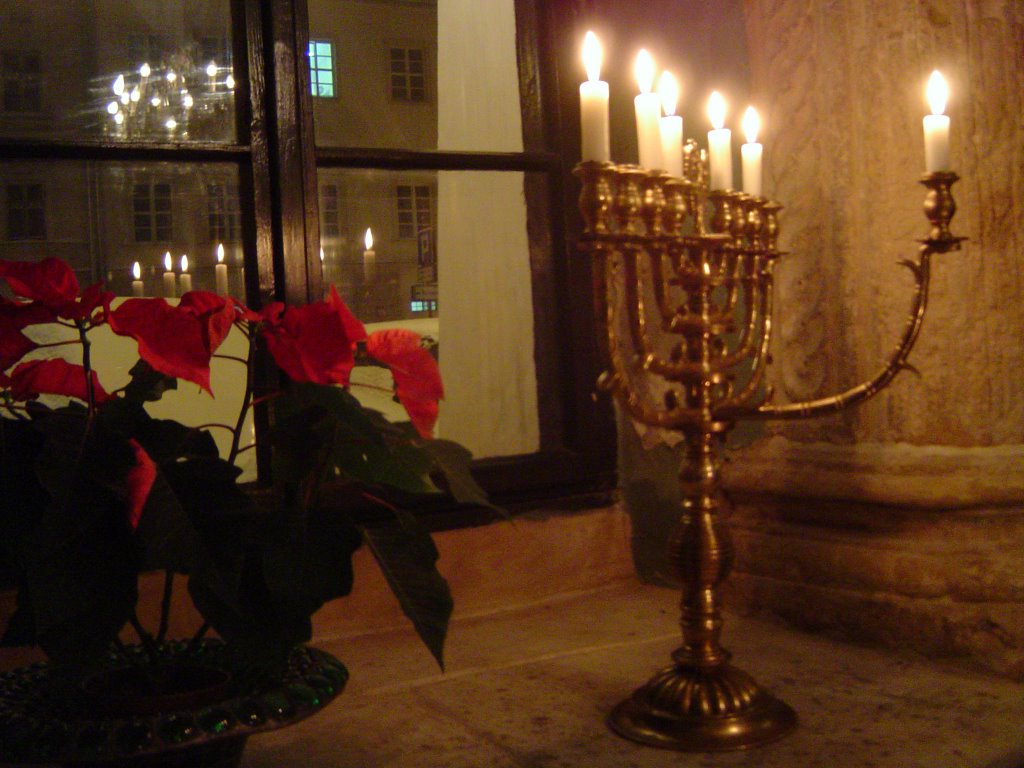
A more somber fact about Krakow is that it is located about an hour away from the largest of the former Nazi death camps: Auschwitz-Birkenau. I had every intention of seeing the camp, but the weather took a bad turn and it began snowing harder than I’d seen yet. Instead I decided to take a look around the old Jewish quarter of town. This is the area where thousands of Jews had lived prior to World War Two in a vibrant community that was hundreds of years old. By 1945, the Nazis had killed or imprisoned all of them. Now, only a few hundred Jews actually live in this area, but it has recently experienced a rebirth as a center of Jewish culture in Eastern Europe. The modern residents of the area are mostly students, intellectuals, young professionals, and artists. I had a traditional Jewish dinner at a restaurant called Aleff, which was so good and filling that I actually fell asleep for a few minutes while I was waiting for dessert!

So, you might be wondering how things went staying with Ted and his wife? Well, they turned out to be a little crazy. Apparently, they like to get drunk and fight with each other. Ted seems to get the worst of it, as I saw her give him a few good punches in the chest. Although she doesn't know English, she seems to react strongly to the words "my wife", because thats when she knows he's talking about her. Ted explained her aggressiveness by saying she has "German blood". So much for Polish-German relations!

Saturday, December 24, 2005

Turkey finally welcome in Romania!

American Thanksgiving Turkey, that is.

Thanksgiving is truly one of those genuinely American holiday’s that must be 1) celebrated no matter where you are and 2) must be shared with those around you. What is it though that makes Thanksgiving so much more successful than say, Flag Day, or Columbus Day? From a marketing perspective, a must have product feature for a good American holiday is an emphasis on FOOD. Since most Europeans think Americans are gluttons, my American friends and I in Romania decided not to let them down.

So on Saturday the weekend after the real Thanksgiving weekend in the US we hosted around twenty-five Romanians to my friend Brian’s place for a party that included a full on Thanksgiving meal that would have made Martha Stewart proud. This is no small feat in Romania, as some things, such as cranberries, cannot be found anywhere in the country. So literally, there were a few items that weren’t just American, but were really brought from America. Of course, the beverage selection was rounded out by a few Romanian additions, such as tuica (very strong alcohol distilled from fruits) and plenty of Ursus beer. (For some pics of the event, click here: http://www.okcomputer.org/gallery/Turkey-comes-to-Transylvania!)

No Thanksgiving would be complete without reflecting on the origins of the holiday, and I did my best to help our Romanian guests understand where it comes from. I diligently told them the whole story about how the Indians helped the first colonists in America learn to farm the new land, and that the feast was a celebration to give thanks for the successful harvest. I explained that the Indians had been invited so that the colonists could show their gratitude for the help they had received. After this I couldn’t help but notice a few “are we the Indians, then?” looks. At that point I decided it might be best not to tell them about how the some of the colonists got greedy and eventually went on to take away all of the Indian’s land and send them to live in special camps called reservations!

Friday, November 25, 2005

Holding back the Turkish invaders!

Just about everyone knows the legend of Dracula, but most people don't know about the REAL Dracula. He was Vlad Tepes, and he was called Dracula because it meant "Son of the Devil" - his father was called Dracul ("The Devil"). Both of them were rulers in medieval Transylvania, but Dracula got the most acclaim because he was particularly ruthless. As a matter of fact, he was also called "Vlad the Impaler", a name he got because he thought a particularly good way to make the Turks think twice about invading Romania was to defeat one of their armies and then impale the Turkish soldiers on wooden stakes for the next Turkish army to come across on their way through the mountains. He actually could have also been called "Vlad the Skin-You-Aliver" or Vlad the Boil-You-Aliver" since he liked to do those things to his enemies also. I'm sure he got pretty good service at restaurants.

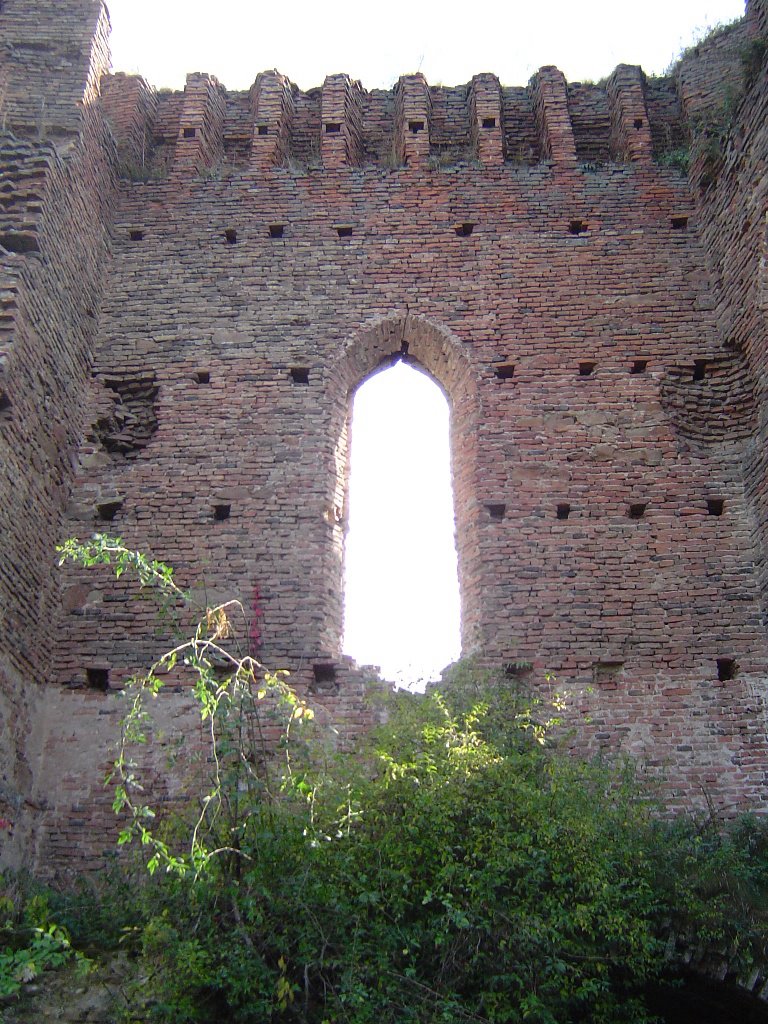
All legends aside, it seems one of the main occupations of Translyvanians was to hold back invading Turks, so other than using gruesome torture methods, they also built some cool castles. When they couldn't swing building a full on castle, they would fortify their town's church to be used as a refuge in case of a seige. These castles and churches, some ruined and some intact, are scattered all over the countryside around Sibiu. One of the more interesting castles is at a town called Slimnic. It is the ruin of a castle that was the site of several battles over a period of hundreds of years. It changed hands many times, and standing in the ruin, or looking out of one of the few intact towers, its easy to imagine the valley below swarming with enemy soldiers. Our project works with local organizations to enhance these sites by installing signs in multiple languages and increase access by developing tour routes that visit these sites. Click on the link for pictures of Slimnic and other fortification sites http://www.okcomputer.org/gallery/album156

Tuesday, November 01, 2005

New York, Chicago, Bucharest, and now - Sibiu (pronounced SEE-bee-yew!)

Well, it looks like my life has been one sprawling metropolis after another, until now. I recently moved to the not-so-sprawling burg of Sibiu, in central Transylvania. Seriously, its small, and I had my doubts at first about how much I would like it, but its turning out to be surprisingly nice. It has beautiful architecture, nice people, and for a small place, quite a few good restaurants and fun places to hang out. Being one of the few Americans living here, I am sort of a novelty to the Romanians I meet. At first, I am usually taken for being German or British, which doesn't arouse much reaction, but when I say I am American, they perk up and start asking all kinds of questions! Recently, some American friends and I invited several Romanians to go to the new bowling alley that just opened up here. None of them had played before, and since we were American and bowling is considered to be a pretty much American "sport", we were of course looked to as experts. We showed them what little we knew, and they didn't seem to mind at all that they were learning to bowl from mediocre bowlers, at best!

I've got an apartment that is located in the center of town, only a block from where I work, and conveniently located close to most of the places I need to go. I live on the ground floor of a building that is located on a small courtyard, and connected to the other buildings that surround the courtyard. I had my choice between semi-luxury modern apartments in high rises (one had a jaccuzzi tub), but chose this one because of location and the "character" it has. Rather than me describing the "character" at length, check out the pictures at http://www.okcomputer.org/gallery/album154

Walking around Sibiu is an adventure in itself, because the streets often wind up and down, with little tunnel like passageways, small pedestrian bridges, and stairways that snake between the buildings. It is in every sense a medieval town. Sometimes I expect to see a mob of peasants, armed with torches and pitchforks, storming down the street, off to kill a witch or hang someone! The picture at left is one of the tunnels I go through most days on my way to and from work. Cobblestones cover most of the streets in the town center. It is pretty common to find restaurants and bars located in old wine cellars, and one my favorites is a little jazz club called Imperium. There are also a few towers to climb where you can get a good view of the city. This link shows some pictures I took walking around "Old town" Sibiu http://www.okcomputer.org/gallery/album155

Sunday, October 23, 2005

Czech yourself!


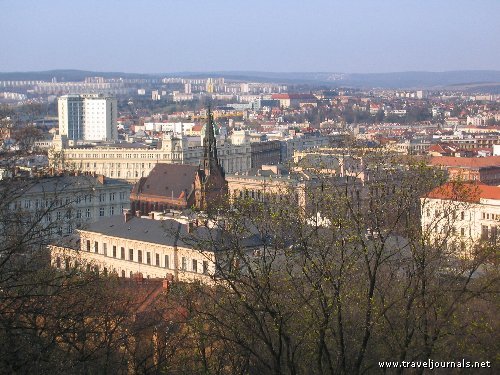
I went to Brno, in the Czech Republic, for the weekend of Oct 21-23. It's about 150 kilometers south of Prague. Its kind of a small town with the usual Eastern European small town features like a large square, churches, and a few fortifications around. It felt strange to be back in a place where I didn't know ANY of the language. I guess I had become used to getting by with the limited Romanian I knew. I have to say that the look on a Czech person's face when you repond to them in Romanian is almost priceless. Its best to stick with English and hope for the best, which isn't usually much in smaller towns like Brno. After shooting a little pool with some friends on Friday night, I kind of got cornered at the bar by a pretty drunk Czech guy who loved all things American, especially the old TV series "Married with Children" and the "American Pie" movies. I knew this because every few minutes he would look in my direction, proudly say "Al Bundy!" and make the football throwing pose. Between that, he also kept saying "Michigan!" and "Stifler!" while pounding me on the back. Other highlights of the trip included some pretty good chicken and beef fajitas, great Czech beer for a buck, and a zany Czech movie with English subtitles on the bus back to Prague!

Thursday, September 22, 2005

Old Europe. Man, I mean like REALLY old Europe

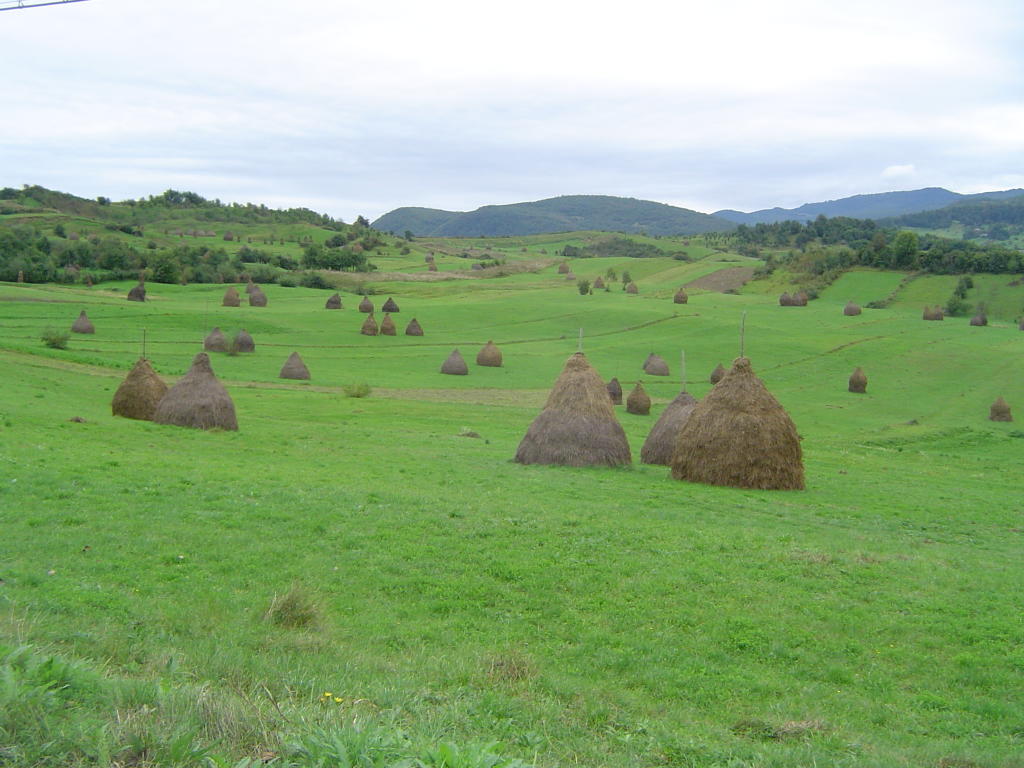
I just got back to Bucharest from spending 4 days in Maramures, one of the areas on which the EDS tourism strengthening project is focusing. Maramures is in Northern Romania, at the Western end of the Romanian Carpathian mountains. Its about as rural and traditional as you can possibly get. According to one story I heard, interpersonal conflicts in some of the towns are still dealt with by giving your enemy the "evil eye", apparently a very effective attitude adjustor that can be responsible for any number of bad things ranging from a difficult case of hives, to certain doom for all of your generations - forever and ever and EVER. Of course, only a qualified witch can give the evil eye, and these days one can be hard to find as a lot of the kids have moved to the cities (no pool of trainable labor) and most experienced witches have retired to vacation homes on the Black Sea. Seriously though, it is quite rural. I saw more horse drawn wagons than cars, and tons of farm animals. Traditional clothing was very popular as well. About 90% of the women wore scarves on their heads. The ones that didn't were usually school girls who I suspect removed their scarves once out of sight of their Mothers. Kids!

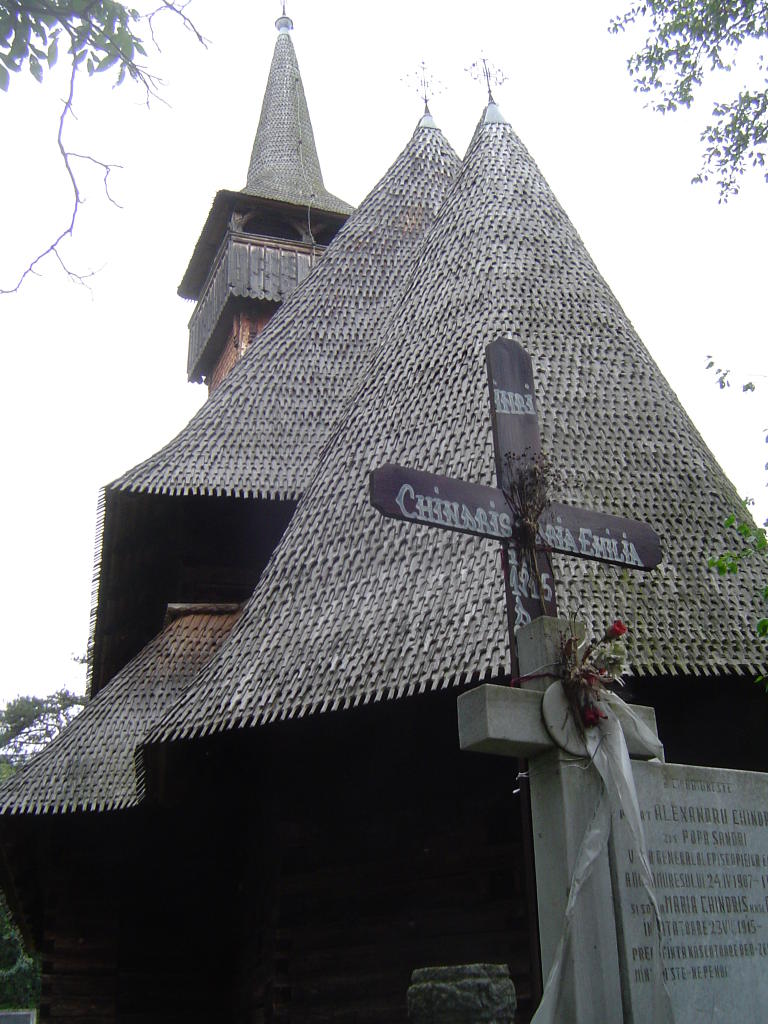
On a more professional level, I was there to look around and get a feel for what tourists to Maramures come to see. One of the notable things are a series of wooden churches that are anywhere from 200 to 700 years old. I was invited to climb up into the steeple of one of these churches, the oldest one actually, and since I figured not many people are given this "opportunity", I decided to accept (so as to not appear ungrateful or disinterested in a regional landmark). Here is where I have to say that the average 700 year old church steeple tends to accumulate a lot of bat and animal shit - everywhere. It was an interesting experience though, with a nice view from the top. Click http://www.okcomputer.org/gallery/album151 for more pictures of the church and some other things from the trip, including traditional hemp (yes, hemp) weaving, the town of Baia Mare, and the hundred some odd cows we encountered on the road as we drove home. By the way, I also came within about 200 yards of the border to Ukraine - close enough that I recieved a message on my phone, presumably from a Ukrainian cell provider, that said "Welcome to the Ukraine". Then the border guards fired some greeting shots in the direction of our car. Okay, I'm kidding about that last part.

Tuesday, September 13, 2005

Translyvania, not just for vampires anymore!

I just returned today from a long weekend in Transylvania, specifically in an area known as Sibiu county. A town in Sibiu county, Rasinari, was host to the 2nd annual Cheese and Brandy festival on Sept 10-11. Our project director, project officer, myself, and a fellow consultant colleague were attending because our project, "Enterprise Development Strengthening" also known as EDS, was one of the organizing partners for the festival. The 200km drive from Bucharest to Rasinari took a little over 4 hours by car. The shocking part is that from what I am told, the roads along the route we took are some of the best in the country!

The entire time at the festival, we were given the royal treatment - which started with the mayor of Rasinari meeting us at our guest house dressed in traditional clothes and offering shots of brandy! The next day, after a morning and afternoon of sampling some very strong Romanian brandy and "palinka" (a very strong home distilled alcohol), we were treated to a 3 hour lunch with the mayor and the organizers of the festival. No need for dinner after that, although the mayor insisted on buying me a plate of mamaliga cu branzei (corn cake with cheese) when we returned to the festival. He also wouldn't let me pay for any beers! The day ended with watching traditional Translyvanian dances and a huge bonfire.

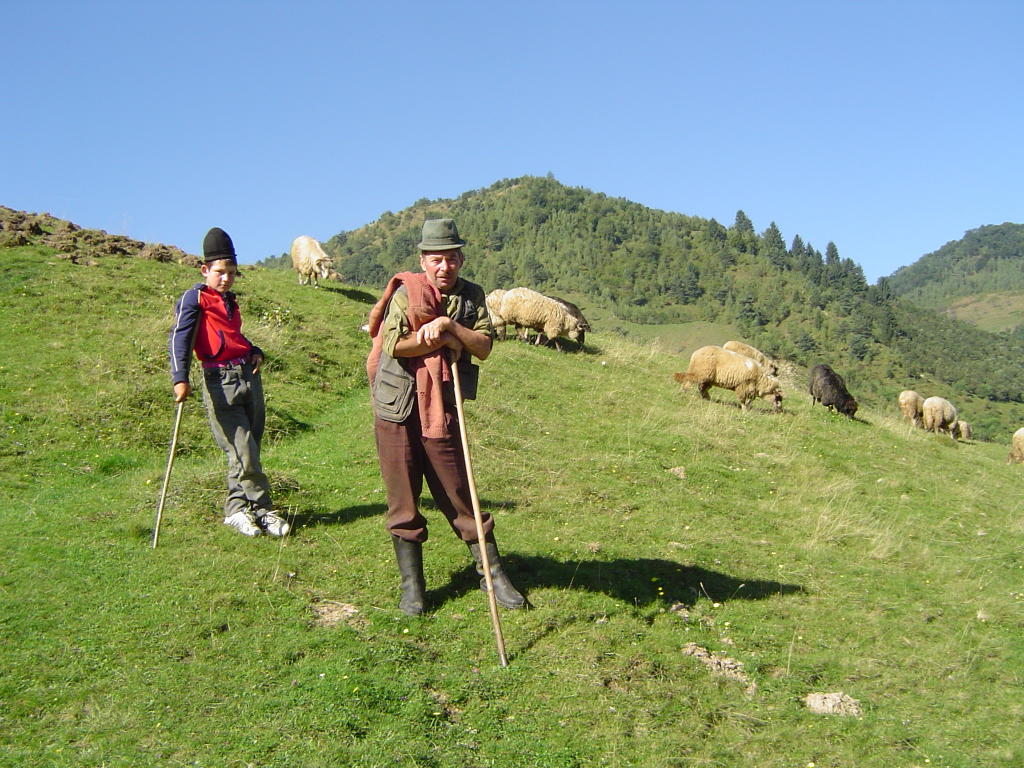
One of the more interesting people we met was a shepard who brought his flock of sheep to graze in the hills above the festival each day. The first morning we were there, we walked up into the hills to talk to him and take some pictures. After chatting for awhile, thanks to my ever improving language skills, I knew he had over 300 sheep, 6 dogs, and 2 sons (one of which is standing with him in the picture above). He had his most senior dog, Boitan ("Boy-tahn") demonstrate his sheep herding skills for us. When we left to go back to the festival, he brought all 300 sheep along and had them graze above the festival grounds while he took a break for a beer or two. Of course, his 6 dogs dutifully stood watch. The mayor later told me that he thought the sheep added a great touch of traditional rural life to the festival. I'd have to agree - as a matter of fact the effect was so authentic that on the second day the shepard actually sold one of his sheep to a local family who promptly slaughtered it and had a barbecue on the spot!

After a couple of days in Rasinari, we moved into the larger town of Sibiu, about 25 km away. Sibiu is a town right out of medieval times, with narrow winding streets and walkways, buildings that are hundreds of years old, and beautiful Saxon churches. The heritage of Sibiu is mostly German, however very few Germans remain, since most of them were displaced during Ceaceascu's reign. Sibiu is getting a lot of ever increasing attention because it has been designated to be the European cultural capital in 2007. Hence, the streets and squares are all being refurbished, and many of the older buildings with cultural significance are being renovated. It is truly going to be spectacular once it is done. The main square of Sibiu will easily be as grand and impressive as Stare Mesto square in Prague. More importantly, the revenue it will bring into this economically depressed area is going to be an incredible and much needed boost to development.